

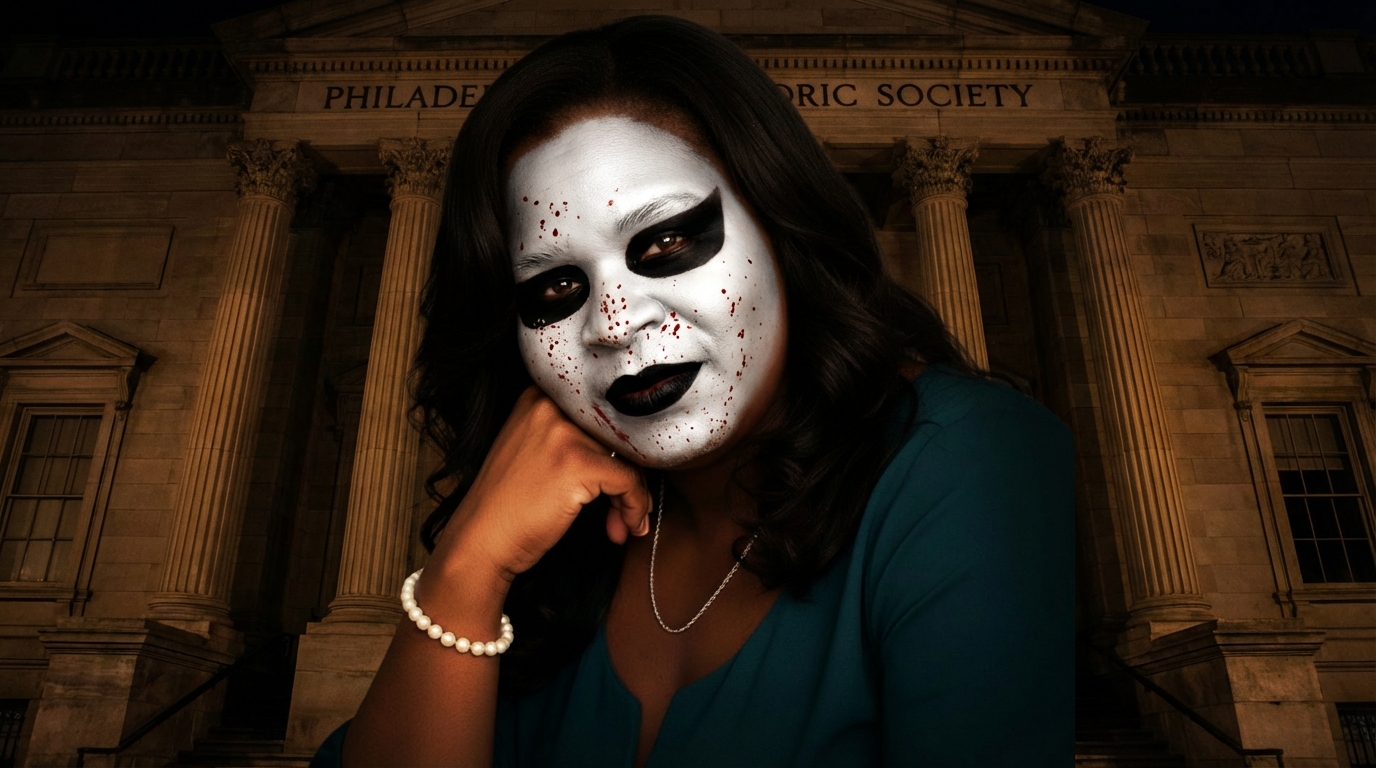
A Black History Month Reflection on Credentials, Narratives, and the Price of Speaking Truth
They say the truth is stranger than fiction. But when you’re Black in America, sometimes truth plays out like a scene from a movie—complete with plot twists, dramatic reveals, and a room full of witnesses holding their breath.
This is my Dead Presidents Part 2. Not a heist. Not a crime. But a robbery of a different kind—the kind that happens when history gets sanitized, when our ancestors get reduced to footnotes, and when the people telling our stories have never lived them.
The Setup
It was 2010, and I was attending a workshop at the Frator Heru Institute on how to write nonprofit applications. The facilitator was Ari Merretazon—a name that meant nothing to me at the time. I had no idea I was sitting in a room with a living legend whose story had inspired one of the most powerful films about Black veterans and systemic betrayal ever made.
The man teaching us about building institutions had lived through hell and come out the other side with a mission.
Who Was Ari Merretazon?
Born Haywood T. Kirkland, Ari served in Vietnam and came home to an America that had no use for Black veterans. The trauma of war, combined with the brutal reality of a country that sent you to fight but wouldn’t fight for you when you returned, created what he called “political rage.”
In 1969, that rage manifested in a D.C. postal truck robbery that netted over $300,000—money Kirkland said was intended for “needy Black kids,” a political act born from systemic neglect. The Hughes Brothers heard his story, featured in Wallace Terry’s book Bloods: An Oral History of the Vietnam War by Black Veterans, and adapted it into the 1995 film Dead Presidents.
The movie’s protagonist, Anthony Curtis, was based on Kirkland’s life—the combat experience, the homecoming disillusionment, the desperate heist, and the courtroom scene where society rejects any explanation for why a decorated veteran would turn to crime.
But the film ends where Kirkland’s real story was just beginning.
After serving 5.5 years at Lorton Reformatory in Virginia, Kirkland—who would later take the name Ari Sesu Merretazon—emerged as an inmate leader. He founded the Incarcerated Veterans Assistance Organization from inside prison walls. He testified before Congress on prison conditions for veterans. He secured disability benefits for incarcerated vets nationwide. President Jimmy Carter invited him to the White House.
After his release around 1974-1975, Ari didn’t fade away. He relocated to Wyncote, Pennsylvania, near Philadelphia, and served as Chief of Staff at Pointman Soldiers Heart Ministry, supporting veterans’ mental health and reintegration. He worked selling air-purification systems to make ends meet. But his real work was advocacy.
He became co-chair of N’COBRA—the National Coalition of Blacks for Reparations in America. He represented the group at the United Nations Working Group on People of African Descent. He spoke at forums, gave interviews well into the 2020s, appeared in YouTube oral history series, and continued to frame his activism as an extension of that original “political rage”—only now channeled into organized advocacy rather than crime.
By 2010, when I met him at the Frator Heru Institute, Ari had spent decades turning survival into structured resistance. Teaching young people how to navigate nonprofit systems, how to build institutions, how to claim their property rights—not just physical property, but the intellectual and cultural property of our own stories.
And I had no idea who he was. And he had no idea who I was either. Just another young Black woman in the room, one of the youngest there, quietly observing. A common practice of mine.
The Field Trip
The class was taking a field trip to the Philadelphia Historic Society for a presentation about Richard Allen, the founder of the African Methodist Episcopal Church and a towering figure in Black Philadelphia history. The focus: examining the historical framing of enslaved people as “property.”
I decided to go. Curiosity got the better of me. As a member of the Philadelphia NAACP since 1997, a Moore College of Art & Design graduate, and someone who’s spent their entire career challenging stereotypes about Black identity through art and advocacy, I knew this topic would hit close to home.
The Presentation
We filed into a large room at the Historical Society, chairs facing a screen. A tall, medium-built white woman—I assume the curator—stood at the front alongside a shorter white woman with a short haircut who would be presenting the research.
The room was packed. A sea of faces, Black and white, all there to hear about Richard Allen’s journey from enslavement to liberation, from being counted as someone else’s property to becoming a property owner himself—purchasing the lot that would become Mother Bethel AME Church, one of the earliest continuously Black-owned church properties in the United States.
I didn’t sit with the group. I positioned myself toward the back, near one of the doors. Old habit. Always know where the exit is.
The presentation began. It covered Allen’s life, his enslavement in Delaware, the legal frameworks that classified human beings as property, and the abolitionist arguments that challenged those frameworks. Allen had been born into slavery on a Delaware property, legally part of his owner’s estate, bought and sold along with land and livestock. The presentation explained how in the legal regimes Allen opposed, an enslaver’s rights were framed as property rights—the law protecting ownership of human beings the same way it protected ownership of buildings or animals.
Allen’s ministry and activism had been dedicated to destroying that framework, to insisting that Black people were entitled to own property and enjoy its benefits rather than be property.
On paper, it was educational. Scholarly, even.
But something felt off.
The Tension Builds
When the floor opened for discussion, the room erupted. Ari and the majority of Black attendees raised pointed, heated questions. How was this story being told? Who was centering the narrative? Why did it feel like we were once again being lectured about our history rather than invited into it?
The curator stood firm behind the presenter. Her tone was condescending, dismissive of the valid concerns being raised. She wasn’t budging. Neither was the presenter.
And then came the ultimate weapon: credentials.
The curator made a point to emphasize that the presenter was a graduate of the “prestigious Moore College of Art & Design” in Philadelphia—as if that settled the matter. As if a degree from an elite institution was an unassailable shield against critique.
My ears perked up.
The Reveal
I looked at the presenter more closely. Something wasn’t sitting right. I knew Moore. I am Moore—Class of 2001, one of maybe 10 Black graduates out of 90 that year. I didn’t recognize this woman as a classmate.
But I did recognize her.
I stood up from my seat near the back. Eyes turned toward me—this young Black woman rising to speak.
“What year did you graduate from Moore?” I asked.
“2001,” she replied.
The room waited.
“I’m also a 2001 graduate of Moore College of Art & Design,” I said clearly, evenly. “And I don’t recognize you as a graduate. I remember you working in the library.”
Silence.
I looked toward where Ari was sitting and saw his mouth hanging open, then breaking into the biggest grin I’d ever seen. The curator looked embarrassed. So did the presenter. The supporters of the presentation—Black and white—sat in stunned disbelief.
I sat back down.
The topic is closed. The celebratory grin of those who’d been defending the narrative dissolved. The power dynamics in that room had shifted, and everyone felt it.
The Aftermath
At the reception afterward—cookies, bottled drinks, polite chatter—an older white woman approached me. She was grinning, looked like old money. I believe, though I’m not certain, she was a founder or major supporter of something related to Green Tree.
She told me she was proud of my question and satisfied with my answer. She handed me her card.
From that day forward, Ari and I became great friends. We’ve collaborated on countless topics, shared stories, and challenged each other’s thinking. Our friendship has endured because it was forged in that moment—when we both refused to let history be whitewashed, literally and figuratively.
Here was a man who had robbed an armored truck out of political rage and survived to become one of the most important advocates for veterans’ rights and reparations in the country. And here I was, a young artist and entrepreneur who’d spent my life challenging narratives through my work. We recognized something in each other that day.
What Dead Presidents Taught Me
The 1995 film Dead Presidents tells the story of a young Black man who goes to Vietnam, comes home traumatized and discarded by the country he fought for, and in desperation, commits a robbery. The movie—based on Haywood T. Kirkland’s real life—ends with him facing 15 years to life, his pleas about systemic neglect dismissed by a system that never valued him.
But Ari Merretazon’s real story didn’t end there. His “political rage,” as he called it, was born from abandonment and betrayal. But after prison, he channeled it differently—into advocacy for incarcerated veterans, into the fight for reparations, into teaching young people like me how to navigate systems designed to exclude us, into founding organizations and testifying before Congress, and representing us at the United Nations.
My Dead Presidents Part 2 wasn’t a robbery in the traditional sense. But it was an act of reclamation.
Because when they try to tell your story without you, when they use credentials as shields and institutions as weapons, when they reduce your ancestors to abstract historical concepts while standing in rooms they built—you have every right to check them at the door.
Black History Month and the Stories We Claim
This Black History Month, I’m thinking about Richard Allen—the man at the center of that 2010 presentation. A man who was born into slavery, legally classified as property, but who bought his own freedom, founded a church, and created institutions that endure to this day.
I’m thinking about Ari Merretazon—a man who survived Vietnam, survived prison, and survived a system that tried to erase him. A man who turned rage into purpose and lived into his later years as a public voice for justice, giving interviews well into the 2020s, still fighting, still teaching, still refusing to be silenced.
And I’m thinking about that room in 2010, and how sometimes the most radical act is simply telling the truth.
Moore College of Art & Design, Class of 2001. Roughly 90 graduates. 10 of us are Black. I was one of those 10.
And I was in that room for a reason.